Photos at Costa da Caparica: Light, Wind and the Best Months
How I'd plan portraits or a small elopement on Costa da Caparica, from a July evening I photographed there: the drive from Lisbon, the evening and sunrise light, the sea breeze and the quietest months.
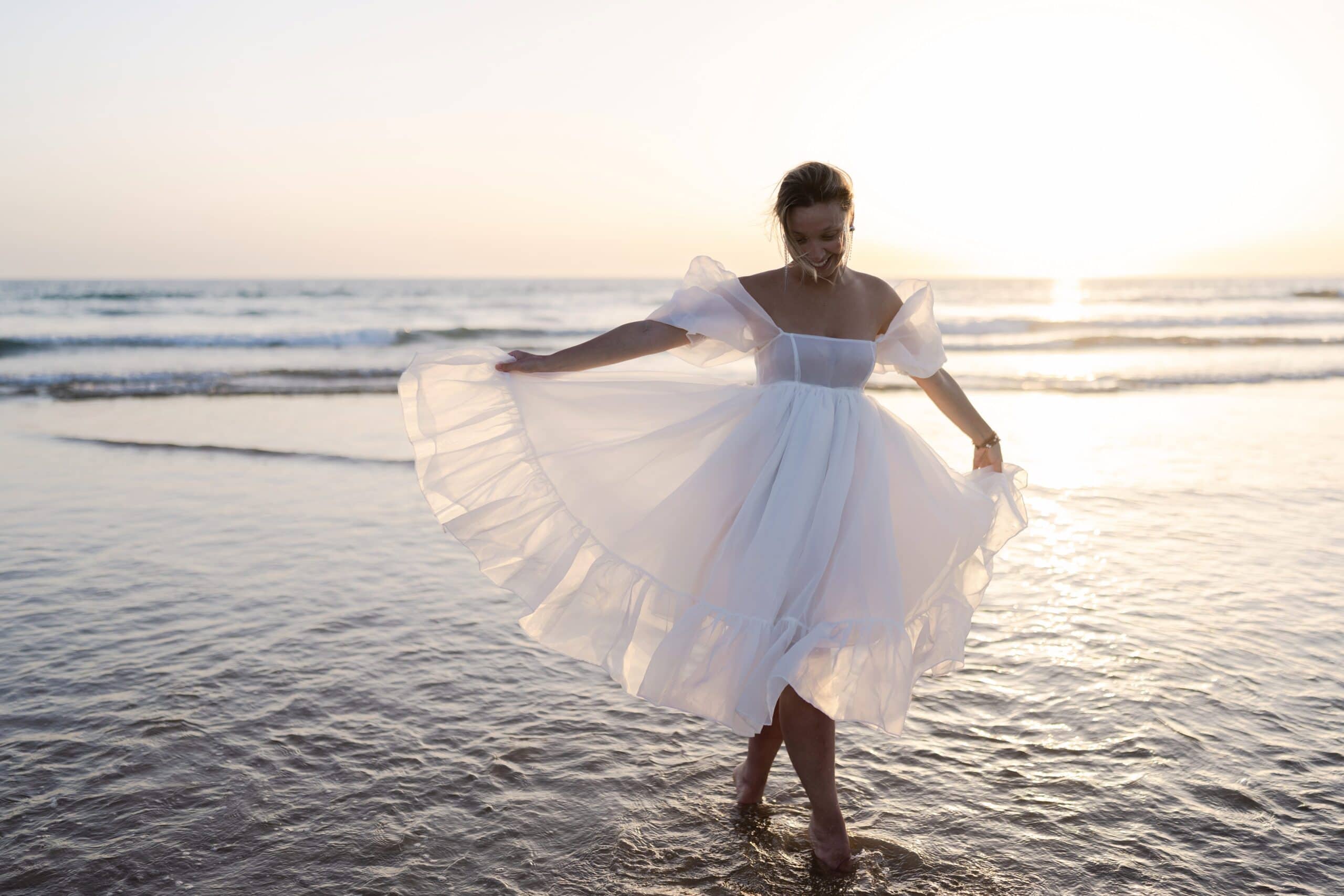
One July evening I photographed a styled bridal editorial on Costa da Caparica, and my aim was simple: let the bride be herself, free to laugh, to run and to enjoy every minute of it. She wore a short white dress that billowed like a cloud in the breeze off the Atlantic, skipped barefoot through the dunes, stood ankle-deep in the sea as the sun went down and ran along the waterline in the last blue light. You can see the story and the photographs here.
Costa da Caparica is the long run of beaches south of the Tagus mouth, across the river from Lisbon and about 25 minutes away by car. The light there is simple to plan: the last hour of sun and the blue half hour after it, or sunrise if you'd like the beach to yourselves. Here is how I'd plan your photos, from the drive to what to wear in the wind.
How do you get to Costa da Caparica from Lisbon?
By car, across the 25 de Abril Bridge: about 25 minutes from Lisbon, and 50 minutes or more on weekends. For an evening session I'd leave a margin for the bridge, or book a driver; Lisbon companies list about €160 to €280 for four hours. The beaches run for kilometers, so we choose the stretch before you set off.
When is the light best at Costa da Caparica?
In the last hour before sunset and the half hour after it. The beach faces west-southwest, so in the evening the light comes off the water, and with the sea behind you it shines through a light dress, as it did through the bride's skirt that July. In December the sun sets almost straight out from the beach; in June it sets well to the right, in the west-northwest.
On the beach the sun sets at about the same time as in Lisbon, around 21:00 in mid-June and around 19:00 in mid-October (sunset month by month). The usable light lasts about half an hour after that, until around 21:30 and 19:30. The clocks go back on the last Sunday of October (31 October in 2027), and sunset moves an hour earlier overnight.
The sun low over the Atlantic at the water's edge
When the sun had gone, the light over the water turned blue, and the bride ran along the wet sand at the waterline, where it is firm underfoot. In that low light at Caparica her movement became a blur of skirt and hair.
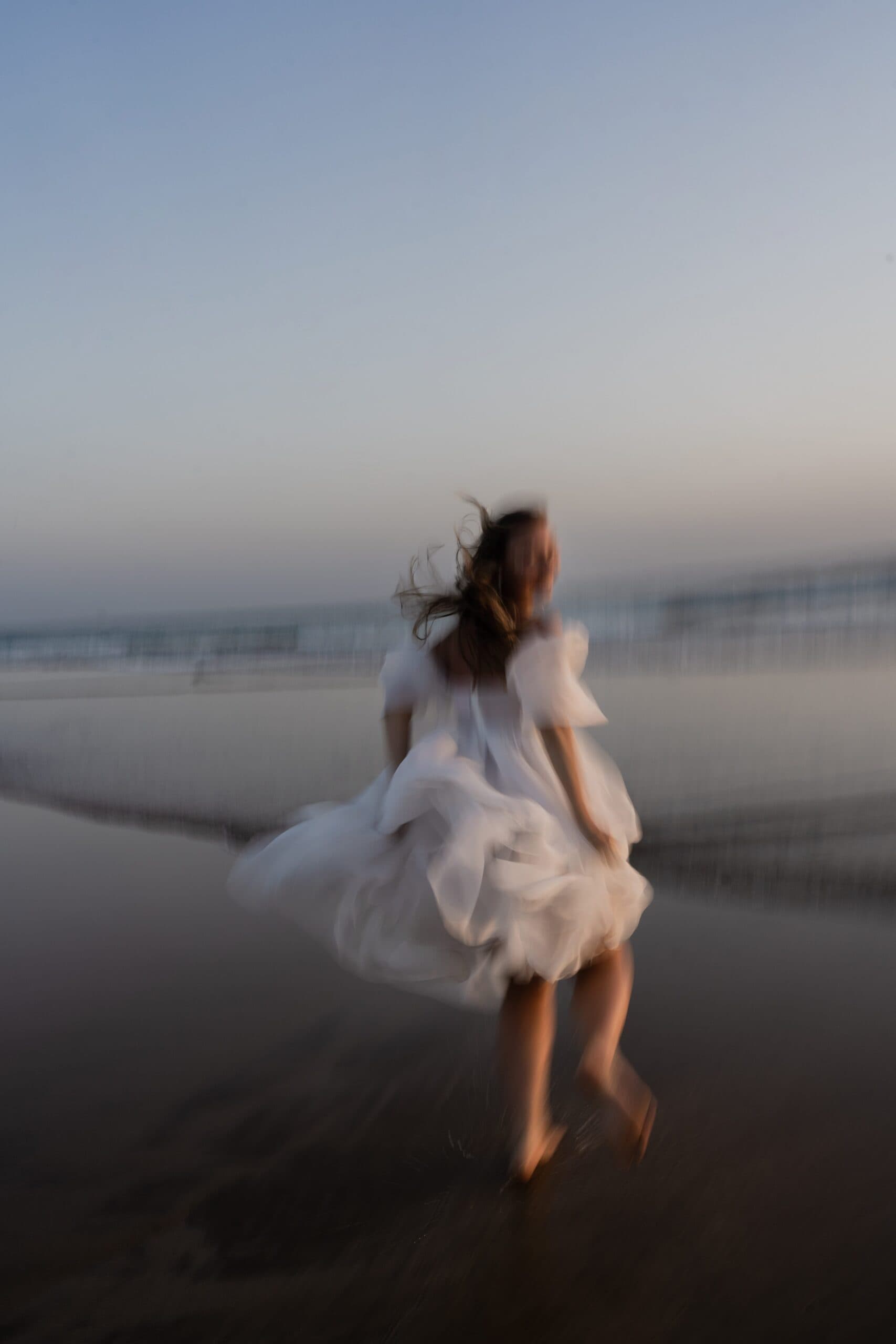
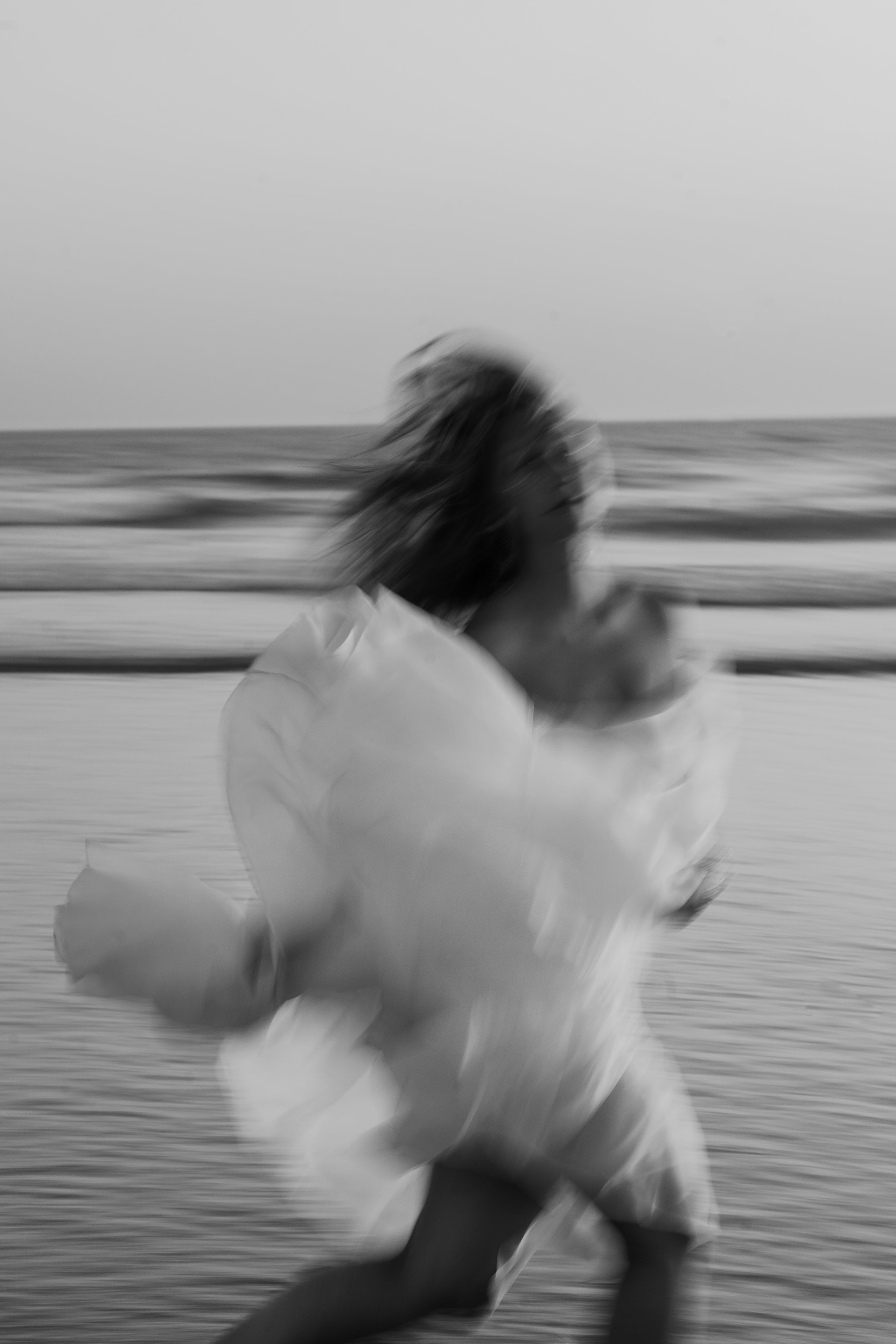
The last blue light at the waterline
How would I plan the evening?
Much as that July evening ran. A two-hour session starts about 90 minutes before sunset in the dunes behind the beach, where sand paths wind between tufts of grass and the low sun comes through a dress from behind. As the sun drops toward the sea we go down to the water's edge, and we stay at the waterline for the blue half hour after sunset. In mid-June that means starting around 19:30 and finishing around 21:30; in mid-October, around 17:30 and 19:30.
Is sunrise worth it at Caparica?
It's my other choice here, at about 06:15 in mid-June and 07:45 in mid-October. The sun comes up behind you, over the land, so you won't see it rise from the sea, but the bridge is empty and so is the beach. In June that means leaving Lisbon before 05:30, or sleeping near the beach the night before.
Which months are best for photos at Costa da Caparica?
For portraits I suggest May, June, September or October, on a weekday: long evenings, and fewer people on the sand than in July and August. In 2026 the bathing season on Almada's 22 lifeguarded beaches, from Cova do Vapor to Fonte da Telha, ran from 1 June to 30 September, and on weekends the drive can double. Winter works too, if you don't mind sunset between about 17:15 and 18:15.
What should you wear for the wind and sand?
Choose a dress that can move. That July evening the sea breeze filled the short skirt in frame after frame, and in the dunes the low sun came through its sheer layers until they glowed. Her hair was in a loose bun and her makeup was kept light, with one detail: a hint of sparkle on her eyes. I believe it's a look many brides would choose for their own day: simple, and personal.
Go barefoot on Caparica's sand. The wet sand by the water is firm enough to run on, while the paths through the dunes are soft. Wind needs no plan B, only a dress and hair that can move with it. Rain is different: a beach session can wait out a shower, move to another evening or be rescheduled.

The low sun through the skirt in the dunes
What about a small ceremony?
A symbolic ceremony needs no legal paperwork in Portugal. For a legal wedding, a Portuguese registrar can marry you at a place agreed in advance, for €200 in total outside the registry office plus the registrar's transport. My guide to eloping in Portugal covers the symbolic and the legal route.
What does a photoshoot at Caparica cost?
For the two of you, a two-hour session from €600 covers the last 90 minutes of sun and the half hour after it, the light these photographs were made in. A portrait session for one starts at €400 for an hour, and elopement collections, with a ceremony, start at €1,200. Costa da Caparica is inside the area I cover without a travel fee, and a session comes back as 100 to 150+ edited photographs within two to four weeks. See engagement and proposal sessions and elopements.
If you'd like an evening like this by the sea near Lisbon, send me your date. I'll send back the sunset and the last light at Costa da Caparica for that day, and I'd be honored to photograph it.
Details checked in October 2026

Yana Yart
Yana Yart is a wedding and elopement photographer based in Cascais, Portugal, with over 15 years behind the camera in 55 countries. She studied architecture for five years, which is why every day she photographs is planned around the light.