A Winter Elopement in Chamonix
What a winter elopement in Chamonix needs, from the snowy bridal editorial I photographed there: why the legal wedding happens at home, getting in from Geneva, the short light, the cold and a plan B.
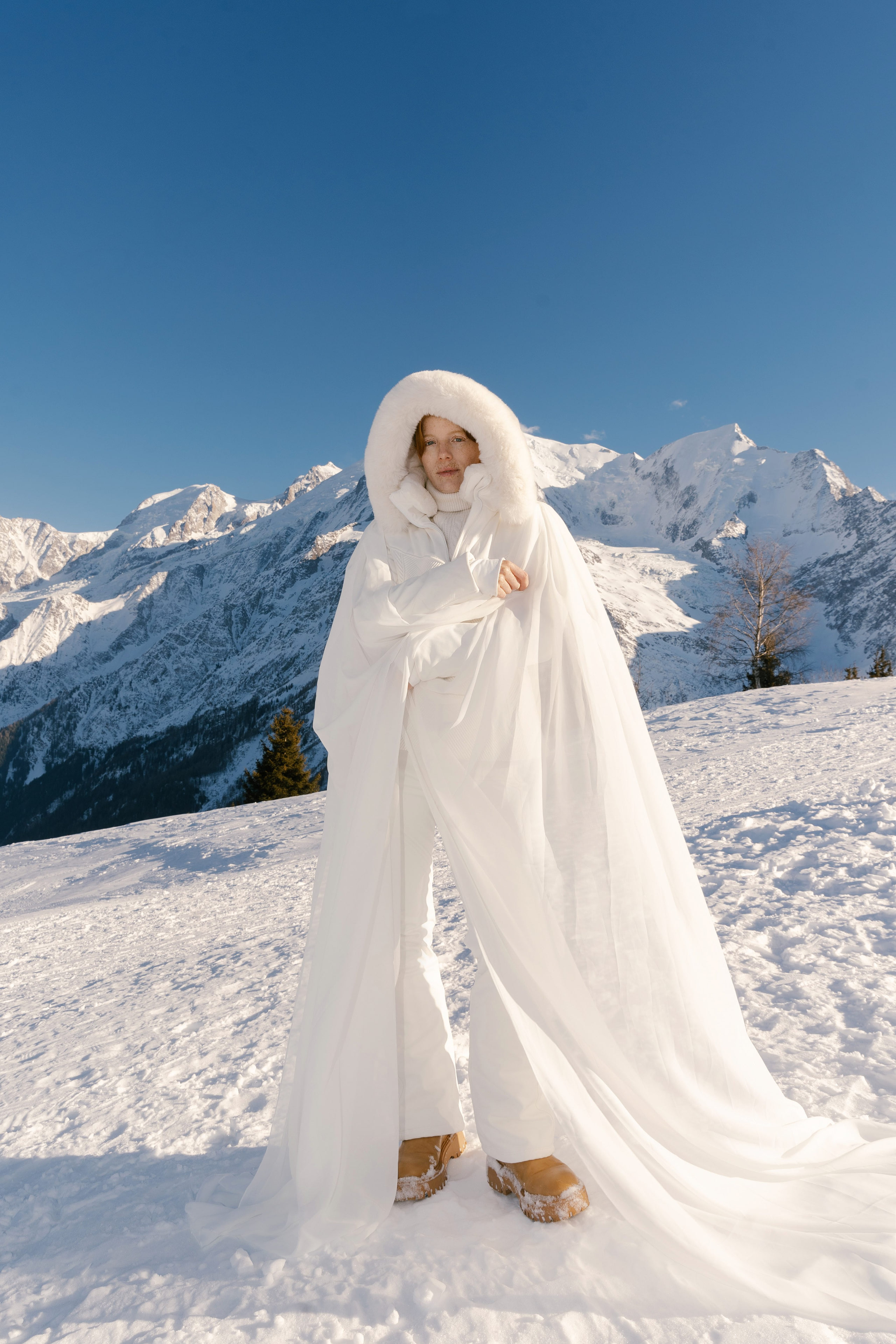
On a winter holiday in Chamonix, I photographed a bridal editorial on a snowy slope: a white ski suit, a long tulle cape and the glaciers of the Alps behind her. Snow throws the sun back at you, and white on white in hard sun goes flat, so I broke a rule and used a flash in full sun. It was a styled editorial, not a wedding, and it is still one of my favorite shoots.
If you want a winter day like it for real, plan a symbolic ceremony in the mountains and the legal wedding at home, fly into Geneva, about an hour away, and keep the portraits for the last hours of sun, which sets before 17:00 in December.
Near Chamonix, winter 2025
Can you legally get married in Chamonix?
Not if you're both foreign and live abroad, which is why I suggest the legal wedding at home and a symbolic ceremony in the mountains. Under the French rules, you marry in a town where one of you, or a parent, has a home or a residence; being born there isn't enough. Residence means at least one month of continuous stay on the day the banns are published, proved with a dated bill or rent receipt in your name. The banns hang on the town hall door for 10 days, and the mayor or a deputy marries you at the town hall, in a room open to the public.
Two foreigners who live abroad can marry in France only at their own country's consulate, if it performs marriages at all, or in a town of an overseas collectivity or New Caledonia. A church wedding is no way around it, because French law forbids a religious ceremony before the civil one.
A symbolic ceremony isn't a marriage under French law, so it can happen wherever the owner of the place agrees and local rules allow: a chalet, a hotel terrace, a field of snow you reach on skis. If being legally married on the trip itself matters to you, Portugal marries couples who don't live there; my guide to eloping in Portugal has the steps by passport.
How do you get to Chamonix in winter?
Through Geneva, whose airport is about an hour away. Lyon and Milan are about two hours, and the Mont Blanc Tunnel gives direct access from Italy. Trains reach Chamonix from Paris, Lyon, Annecy, Bellegarde, Geneva and Martigny. Once you're there, the guest card (Carte d'Hôte) from your hotel or chalet makes the valley train between Servoz and Vallorcine free.
If you drive, from 1 November to 31 March the whole commune of Chamonix is in France's winter-equipment zone. You carry chains or snow socks for at least two driving wheels, or drive on four winter tires marked 3PMSF, a three-peaked mountain with a snowflake. Ask for them when you book a car in Geneva.
When is the light best for winter photos in Chamonix?
In the last two hours of sun, up on a slope rather than down in the valley. The sun sets around 16:45 in mid-December, around 18:00 in mid-February and around 18:45 in mid-March. The clocks go forward on the last Sunday of March (28 March in 2027), and sunset moves an hour later overnight.
Those times assume a flat horizon, and Chamonix lies in a deep valley. On the valley floor the sun goes behind the mountains well before them, and how much earlier depends on where you stand. On an open slope higher up, the sun sets closer to those times. If a lift takes you up, check when the last one comes down before you plan around the light.
The hour matters for a white dress, too. In hard sun on snow, white merges with the slope and the folds disappear; in the last hour, low side light gives the folds back and warms faces. On the Chamonix editorial I also used an external flash: it put light into the folds of the tulle and let me expose for the bright snow, so the sky stayed deep blue and the mountains kept their texture.
How cold is it, and what should you wear?
Plan for real cold. In the valley, at 1,042 m, January averages −7.1 °C at night and 2.7 °C by day, and February −6.3 °C and 5.0 °C. It freezes on 26 to 29 nights a month from December to February (Météo-France), and higher up it is usually colder still.
Wear whatever lets you stand in snow for an hour. Our bride in Chamonix wore a white ski jacket and trousers under the tulle cape, with tan suede snow boots. With a gown, wear boots that grip under it, keep a warm coat on between frames and keep the outdoor portraits short.
What is the plan B for snow, wind or cloud?
Time. Book the portraits for the first clear day of your stay and keep a second day free. Conditions in the high mountains change very fast. Compagnie du Mont-Blanc, which runs the ski areas and the Aiguille du Midi cable car, can stop its lifts for wind, hail or ice; its webcams cover most of its sites, so check them that morning.
From December to March, February is the driest month in the valley, with 8.4 days of at least 1 mm of rain or snow, against 10.6 in December. If the weather closes in on the day, hold the ceremony indoors, in a chalet or a room with a window on the mountain, and move the portraits to the next clear spell.
How far ahead should you plan?
A symbolic ceremony has no French paperwork to wait for, so the lead time depends on your hotel and your photographer. For weddings I suggest booking 8 to 12 months ahead; elopements often need less.
Photographing your winter elopement
I live in Cascais, on the Lisbon coast, and travel across Europe for weddings and elopements, from Lake Como to Malta. This editorial is the one Chamonix shoot in my portfolio. My elopement collections start at €1,200, from a four-hour ceremony-and-portraits story to a full day, with 300 to 900+ edited photographs. Travel across Europe starts at €900, flights and stay included. I also suggest we meet the evening before, over dinner or a short session, so I'm a familiar face on the day. The elopement collections have the details.
Send me your dates and how many people you'd bring, and I'll tell you how I'd plan your day in Chamonix around the light, from the first frame to the last lift down.
Details checked in October 2026
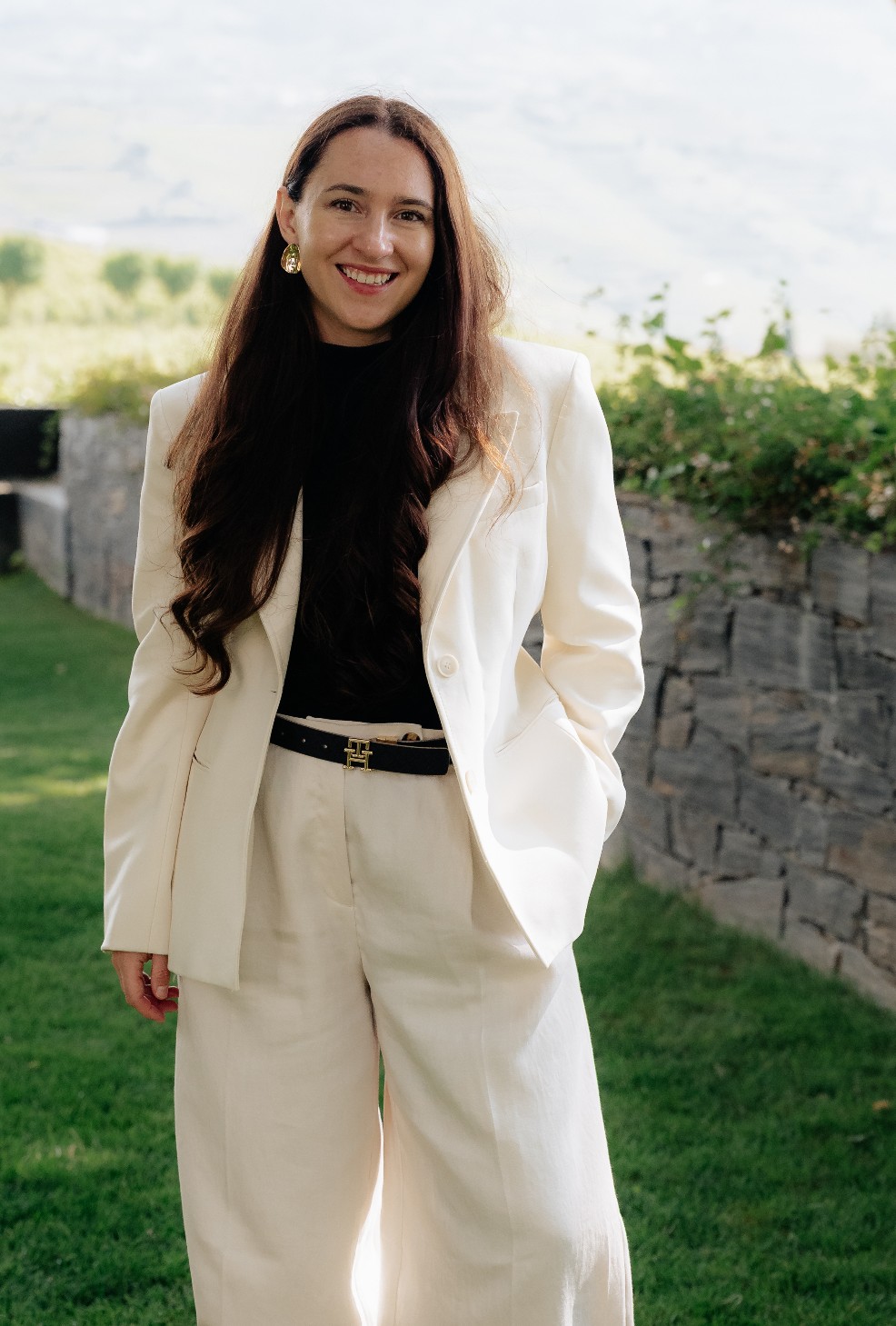
Yana Yart
Yana Yart is a wedding and elopement photographer based in Cascais, Portugal, with over 15 years behind the camera in 55 countries. She studied architecture for five years, which is why every day she photographs is planned around the light.